Chennai: It’s only October, and the year is already showing signs of a record-breaking milestone for Tamil cinema. Nelson and Rajinikanth’s Jailer 2 has officially become the highest-grossing Tamil film of all time and is well on its way to becoming the first ₹1,000 crore Tamil film.
“Jailer 2 is inching close to ₹1,000 crore. I hope this is the first Tamil film to reach there,” says popular Tamil film distributor Tiruppur Subramaniam. The film had grossed ₹755.50 crore worldwide at the time of writing.
But there is more to this than box-office numbers alone. That 2026 made room for Jailer 2 alongside the delicate, deeply powerful Dorothy is noteworthy in itself.
‘Dorothy’ Turns Profitable on Theatrical Alone
Tamil film industry tracker Sreedhar Pillai says Dorothy was profitable from its theatrical release alone.

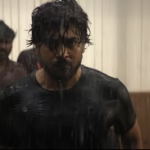

“It had such a tough release window, and there was so much competition all around. But the way it became a wildfire in theatres was phenomenal,” he says. The film went against mainstream conventions and still became a hit — something that was unimaginable a few years ago.
“The audiences have paved the way for all this. I cannot imagine Dorothy running with this kind of success even one or two years back. Earlier, these kinds of films used to run in high-end multiplexes, but today, it has gone down to the tier 2 and 3 cities and is doing really well.”
The Karthik Subbaraj film, co-starring Rishikanth, Sananth and Keerthy Suresh, tackles with audacity themes of masculinity and the story of a trans woman’s transition. Made on a tight budget, it has made ₹15.88 crore in India net collections, continuing to run in theatres despite its recent arrival on Netflix.
‘Modha Rathiri’ and the Power of Word of Mouth
Reaping similar rewards is Raja Karuppasamy’s Modha Rathiri, which also co-starred Rishikanth. The film, released on August 21, struggled to fill theatres in its first few days but sustained terrific word of mouth.
“For the first three days, there weren’t people in the theatres,” points out Karuppasamy. “But once we started giving interviews and going to the theatres, people started coming. My film didn’t have known faces, but the word of mouth was strong. For example, a person who had watched the film one day actually brought in his friends the next day, which I personally saw. This is how the film ran for 55 days.”
Through amiable performances by Anishma Anilkumar and Rishikanth, the film told the tragicomic story of a distraught couple forced to marry.
Nobody wanted to distribute Modha Rathiri, but it struck a chord, Pillai notes. “The theatrical release is most essential. If Modha Rathiri had been released exclusively on streaming, it would’ve never had this kind of rave response.”
Karuppasamy, who set out to explore patriarchy in modern marriages, chose comedy to drive home his message.
“I was pleasantly surprised by the recognition of the film following its release on streaming,” he says. But the joy comes with a twinge of sadness. “I am happy about the admiration, but maybe it didn’t get the same level of recognition in the theatres. Not just my films, but films like Baththa and Dorothy need to make ₹50-100 crores. It’s not just about money, but good films need to make commercial sense.”
A Changing Template
The year also produced hits with significant star power, including Suriya’s Karuppu and Soori’s Mandaadi. But the last few months have been marked by smaller films, including Arjun-Preity Mukhundhan’s Blast and Vijay Sethupathi’s Baththa.
A lot of it has to do with how protagonists are written, Pillai says. “The template for hardcore commercial cinema has changed, and even Rajinikanth has adapted to it. Rather than insist on the usual introductory songs and four fights, the actor has allowed other characters to take on these moments, signalling a shift in how star vehicles are conceived and presented.”
Several star-driven vehicles have failed earlier, as the tracker points out, but Jailer 2 sailed through. “With Suraj Venjaramoodu, SJ Suryah and Namo Narayana playing their parts, it delivered commercial entertainment at its best.” The sequel’s biggest talking point turned out to be Namo Narayana’s Moorthy, a lovable goof who goes head to head with Rajinikanth’s Muthuvel Pandian.
A Shift in Viewing Habits
It might not be an overstatement to say 2026 marks a significant shift in Tamil viewing habits.
“This was once a trend largely associated with Malayalam cinema, but it has now seeped into Tamil cinema as well. Ultimately, audiences are willing to watch films of any scale, as long as they are good,” says Subramanian.
With box office numbers, the distributor reminds, it’s pertinent to keep the basis of profitability in mind. “A film is a hit only if it makes around 2-3 times the cost of its production. It’s not hitting about ₹200 to ₹300 crore.”
Karuppasamy, who credits his team’s incessant promotions for the streaming success, hopes to proudly parade a 100-day sticker for his film one day. “I am still promoting the film. I reached out to Aamir Khan sir to see if he would watch it, and Aju Varghese sir has also said he will watch and promote it. I want the film to reach many more audiences. I have always wanted to put up a 100-day poster for one of my films. Hopefully, that dream comes true with my next film.”