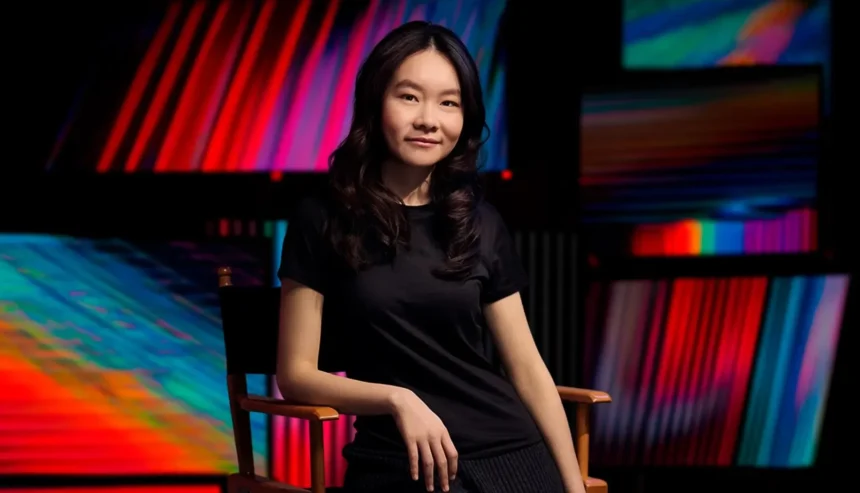
In years past, when a great athlete retired, they typically told their story through a ghost-written memoir or biopic. But Hall of Fame basketball player Carmelo Anthony opted instead for the storytelling medium of the moment, striking a partnership with Utopai Studios, a Silicon Valley-based startup specializing in AI movies and TV shows.
Anthony will produce AI-generated video content about his life and other sports stories through his Creative 7 Productions label. His investment into Utopai – which Forbes estimates at around 5million–wasatastaggering1 billion valuation.
A billion-dollar bet on AI movies
It’s an astronomical amount for a company with revenue that Forbes estimates was less than $50 million in 2025, and has yet to put out a full-length movie or TV show. Still, the premium price tag announces Utopai as a true competitor in the ongoing Hollywood AI arms race.
“What stood out to me wasn’t just how advanced the technology is, but the vision and intention behind it,” Anthony told Forbes.



Who is Cecilia Shen?
In the notoriously insular Hollywood community, Utopai’s 25-year-old cofounder Cecilia Shen certainly does not fit the traditional mold of a movie mogul. Born in China and raised in Toronto, Shen dropped out of the University of Waterloo during the pandemic, took an AI job at the Royal Bank of Canada, and then landed at Google’s moonshot factory X, where she met cofounder Jie Yang.
In 2022 they founded what was then known as Cybever, initially developing AI tools to generate 3D environments for videogame development, before seeing its potential in film and television.
The AI studio gold rush
Shen and Yang were far from alone. According to one industry report, more than 65 new AI studios have launched since 2022. Disney struck a $1 billion deal with OpenAI; Netflix bought Ben Affleck’s AI filmmaking toolkit; Fox Entertainment took a stake in Holywater; Lionsgate partnered with Runway AI.
“I think there’s a lot of investor excitement around, ‘What’s the future of the industry going to be?’” says Bryn Mooser, founder of competitor Asteria Film Co.
The technology behind Utopai
Utopai released PAI, its new proprietary storytelling platform, in March. The procedural content generation engine allows character models to be designed once and used in multiple scenes. A filmmaker can select camera angles, edit a performance and environment, and iterate without needing to re-render the entire sequence.
In the first 60 days since PAI’s release, Utopai earned $11 million in annual recurring revenue by licensing the technology to production companies around the world.
From tech provider to studio
Shen rebranded Cybever as Utopai Studios and began funding a slate of original film and television productions. “You can’t become a $10 billion company as just a technology provider,” she says. “You have to become a studio.”
Utopai fully owns Cortés, a feature-length historical epic written by Oscar-nominated writer Nicholas Kazan, who was long told the script was “unfilmable” by Hollywood studios. “Too big, too expensive, just always ‘too,’” Kazan said.
The bottom line
Shen estimates only 30-40 people are needed to work on a project like Cortés – compared to the thousands needed without AI. Production costs could be less than 10millioneach,apittancecomparedtothe250 million-plus price tag of traditional blockbusters.
“A lot of people are not scared of the technology,” says Shen. “And for the people that are just a little bit hesitant, I think when they see our approach, they will feel much better.”
Whether AI-generated feature films can find an audience in the U.S. remains to be seen. But with a billion-dollar valuation and NBA star backing, Utopai is betting big that they will.