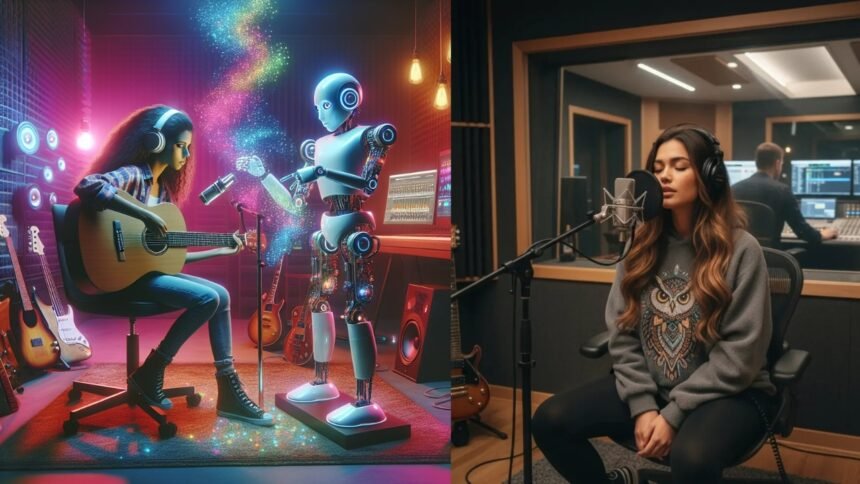
Just two years ago, AI music generation was treated as blasphemy—a musician killer trained without permission on millions of copyrighted songs. Today, that same technology is quietly being integrated into professional workflows, signaling a major vibe shift in how the music industry copes with its ongoing AI revolution.
According to Mikey Shulman, CEO and co-founder of Suno, the industry’s most prominent AI music generation platform, the change has been dramatic. “It wasn’t even happening at the end of last year, but in the past couple months since the beginning of this year,” Shulman told The Hollywood Reporter. “I don’t meet a lot of producers and songwriters who aren’t using Suno at least a little bit in their workflows.”
The Numbers Behind the Shift
Suno announced in February 2026 that it had surpassed 2 million paying subscribers—a figure Shulman argues reflects genuine user interest, even if the songs being created aren’t chart-topping hits.
| Metric | Value |
|---|---|
| Paying subscribers | 2 million+ |
| Daily AI tracks on Deezer | 60,000 |
| Fraudulent streams on AI tracks | Up to 85% |
| Organic consumer interest in AI music | <0.5% (per UMG) |
However, not all metrics are encouraging. French streaming service Deezer reported earlier this year that it is seeing 60,000 AI tracks uploaded daily, with as much as 85 percent of streams on those tracks being fraudulent—suggesting that much of the AI music economy is currently powered by bad actors looking to siphon royalties from legitimate artists.



The Legal Landscape – Lawsuits Turn to Partnerships
Suno entered the industry as a major taboo. By 2024, both Suno and its competitor Udio were sued by the Big Three major music companies (Universal, Warner, Sony) for mass copyright infringement, alleging the platforms were trained on millions of copyrighted songs without permission.
Current Legal Status
| Company | Universal | Warner | Sony |
|---|---|---|---|
| Suno | In litigation | Settled (Nov 2025) | In litigation |
| Udio | Settled | Settled | In litigation |
Udio carved out settlements with Universal and Warner last fall. Suno managed to settle with Warner in November 2025. Sony remains in litigation with both companies—the only major label that hasn’t settled with either.
As part of its settlement with Warner, Suno will roll out a new version of its model trained only on licensed music from that label sometime in 2026. The old model will be phased out. Whether the new model will be nearly as effective as one trained on millions of more songs remains to be seen.
How Professionals Are Actually Using AI
Despite ongoing controversy, several songwriters who spoke with The Hollywood Reporter acknowledged that they are seeing peers use AI platforms like Suno more frequently.
Autumn Rowe’s Experience
Autumn Rowe, a career songwriter with credits for Jon Batiste, Dua Lipa, and Ava Max, says many of her peers have used Suno to make demo productions of songs they wrote—and have managed to get those songs placed with recording artists. (Once an artist takes a song, the demo is re-produced by an actual producer, she notes.)
Rowe remains an AI skeptic but has started lightly experimenting. In recent weeks, she has taken years-old demos that never got recorded and used Suno to “remix” them, giving the songs a second life.
“I’ve got concerns with AI. I worry about younger writers who use Suno before they’ve spent the many, many hours crafting songs,” Rowe says. “But I do think AI in music will keep getting more prominent, and I think it could help writers get more leverage if they can do a lot of that production early themselves.”
Suno’s Grammy Week Songwriting Camp
During Grammy Week, Suno held a days-long songwriting camp at a Hollywood recording studio, hosting industry executives, artists, and songwriters. Led by Grammy-winning producer Om’Mas Keith, the sessions demonstrated how Suno could assist creators.
Writers fed lyrics to Suno and, within minutes, had tracks with intricate production and convincing lead vocals. World-class musicians—including string players and a drummer—then recorded additional parts to add a personalized human touch.
The Skeptics’ View – “Say No to Suno”
Not everyone is embracing the shift. Just last month, a coalition of prominent artist advocates published an open letter called “Say No to Suno,” comparing the company to thieves who made off with jewels at the Louvre. They deemed the model “the hijacking of the world’s entire treasure-trove of music.”
Key Criticisms of AI Music
| Criticism | Explanation |
|---|---|
| Copyright infringement | Models trained on unlicensed music |
| Devaluation of craft | Bypasses years of learning instruments and songwriting |
| Fraud and spam | 85% of AI track streams are fraudulent |
| Royalty dilution | Legitimate artists lose streaming revenue to AI-generated content |
Rowe echoed these concerns: “I don’t know where the idea came from that this needs to move faster. The CEO of Suno can say people don’t like learning instruments or people don’t like the process of making music, but why is the music being made if it doesn’t come from a place of understanding or liking the process?”
She is referring to one of Shulman’s most controversial quotes, where he said in a podcast interview that he doesn’t think “the majority of people enjoy the majority of time it takes to make music.” Shulman later walked that quote back, telling Billboard that “I really wish I had chosen different words.”
UMG’s Take – “AI Slop or Fraud Fodder”
Universal Music Group’s chief digital officer, Michael Nash, offered a blunt assessment during the company’s March 2026 earnings call:
“We don’t have to theorize about the future of AI saturation as it’s become a marketplace reality. Most of this content is AI slop or fraud fodder.”
Nash added that while AI brings promising opportunities for actual creation and fan interaction, organic consumer interest in AI music on its own is minimal at best—less than half of 1 percent of total consumption.
Streaming services are responding. As The Hollywood Reporter reported in January, Apple Music implemented a new policy to double penalties for those caught engaging in streaming fraud, with platform head Oliver Schusser confirming that the proliferation of AI content played a factor in the move.
Why Music May Be Ahead of Film and TV
Tatiana Cirisano, a music industry analyst at Midia Research, says she is “pleasantly surprised” with how the industry has handled AI thus far.
“The industry does have this reputation of being sort of resistant to tech disruption and not wanting to engage. I’d say at least some of the response we’re seeing is the industry trying to prove that wrong.”
Cirisano notes that the music industry may actually be more equipped than film and TV to handle the AI era, because AI is merely accelerating issues the music industry has already faced for years.
The Barrier for Entry Has Been Lowering for Decades
- At-home recording hardware has become professional-grade and affordable
- Streaming platforms put independent artists on the same shelf as global superstars
- As many as 100,000 songs were being uploaded to Spotify daily even before AI tools like Suno
“AI speeds up the music challenges considerably, but some of the fundamental questions are the same,” Cirisano says. “That’s not something film and TV have faced the same way to this point. Music may be moving on from this a bit more.”
By contrast, in film and TV, the only studio with an active AI content deal is Lionsgate (with AI firm Runway). Disney announced a landmark deal with OpenAI’s Sora that included a $1 billion investment but exited the deal after OpenAI shut Sora down.
What’s Next – Creation as Consumption?
Shulman envisions a future where creation becomes a form of consumption. He draws an analogy to the gaming industry, where users actively participate rather than passively watch.
Potential developments include:
- Creating new music from scratch as a daily activity
- Interactive ways to engage with favorite artists’ music
- Remixing and reimagining existing tracks (similar to TikTok’s sped-up/slowed-down culture)
Shulman teases that such features are on the way for Suno but declines to provide specifics.
“The whole world right now is passive consumption. But everybody is creative. Everybody has this drive to make something. In the future, people will be creating a lot more, and that means interacting with music in new ways. And of course, that means interacting with the music of their favorite artists in new ways.”
A Tipping Point, Not a Resolution
The music industry has crossed an AI tipping point. Two million paying Suno subscribers, settlements with major labels, and growing adoption among professional songwriters all point in one direction: AI-generated music is here to stay.
But the path forward remains deeply contested. Critics worry about fraud, copyright, and the devaluation of musical craft. Streaming services are cracking down on AI-generated spam. Sony Music remains in active litigation with both Suno and Udio. And the long-term economic model for compensating artists and songwriters whose work trains these models is still unclear.
As Shulman himself acknowledges: “You don’t need everybody at the beginning.” Whether the rest of the industry eventually comes along—or continues to fight—will define the next chapter of music’s AI revolution.
For now, the vibe has shifted. The question is no longer whether AI will be part of music-making, but how—and who will benefit.