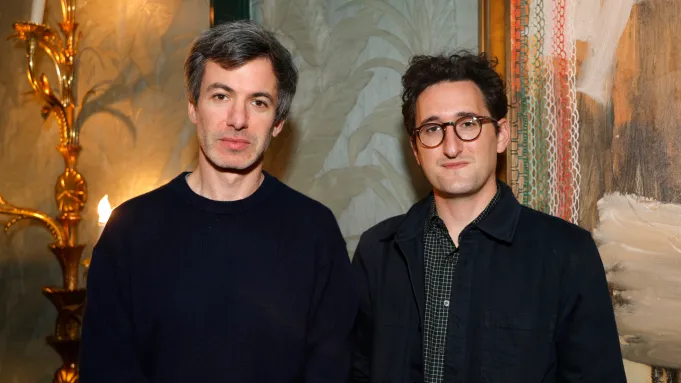
Savannah, Georgia: Less than two months ago, the world did not know of the existence of You Can See Everything. In the time since, the A24 production has opened as one of the most successful documentaries of all time at the North American box office and made a strong case to become the first documentary ever nominated for the best picture Oscar.
The three-hour film, helmed by Nathan Fielder (The Rehearsal) and Lance Oppenheim (Primetime), has captured the zeitgeist through its combination of intimate access to its subjects, its newsmaking revelations, and its audacious formal choices — from the dynamic cinematography to the structural twist that defines the back half.
Speaking at the SCAD Savannah Film Festival in one of their first public Q&As since release, the two reflected on those surprises while still processing the years-long saga of making a film deep inside the bubble of what Oppenheim calls “a real-life human optical illusion.”
How Nathan Ended Up On Camera
Oppenheim: “When we first started this, we didn’t think Nathan was going to be on camera. It was Elizabeth and Billy… they kept asking questions of Nathan. It almost felt like they wanted him to gravitate from behind the camera, in front of it. So it happened sort of organically. One of our operators, Jonathan Mitchell… just panned the camera to Nathan.”


“I actually thought maybe this could be useful — if Nathan was becoming this accidental investigator of these everyday moments, he could try and pull Elizabeth from whatever version of reality she was living in.”
The Seven-Person Crew
Fielder: “For something like this, where you’re evaluating honesty and sincerity on someone’s face, their response even before they answer me is so important… we only had two operators for three cameras in that house.”
“Before we were even rolling, they’d start talking to us. They’d try to catch us off camera and be like, ‘OK, this is what we’re doing today,’ or, ‘Do you want to film this?’… We started coming in before they even woke up because they didn’t lock the door of their house.”
Embracing the Oldest Tenets
Oppenheim: “Ironically for us, what felt new to us in some ways was embracing the oldest tenets of documentary filmmaking — like vérité film. As we were responding to the situation where we had less and less access to Elizabeth, that led us to embracing other modes of filmmaking, like a director on camera or even where we go later on with the re-enactments.”
“It’s amazing seeing the way people are talking about the movie, saying it’s this new formal thing, but I’m like, ‘Oh no, this is actually the oldest.'”
‘We Will Leave Anytime’
Fielder: “We were conscious that this was a mother’s last month with her children. If tensions would ever run high and we sensed that our presence wasn’t wanted, I’d say, ‘Look, if you guys are regretting this decision, we’ll pull the plug. We’ll go.’… And they were very much like, ‘No.'”
Oppenheim: “Stay. Stay for this.”
Fielder: “That was part of the mindfuck of it all.”
On Clarity
Asked whether he now has more clarity on what was going on, Fielder was blunt: “Fuck no.”
Oppenheim: “Seeing it with audiences is always really different for me… It’s like it’s this evolving Rorschach test. There are times where I watch this movie and I feel like the behavior is totally unconscious and she’s not aware of it. And there are times where I’m like, ‘No, she’s totally aware of it.’ It’s hard to operate fully in the world of binaries.”
Fielder: “When you’re in their bubble, you’re in a different mindset than when you step out of it… Also, it does feel like people bring to this a lot that’s inside them. It’s not just what’s on the screen, or else everyone would have a consensus.”
Bringing in Amanda Seyfried
Oppenheim: “We wanted to go to even more people. We reached out, but so many people we tried to talk to that were out of the bubble didn’t want to talk to us because they thought that Elizabeth was this toxic personality. So that led us to [Amanda Seyfried].”
Fielder: “When we reached out to Amanda, she was like, ‘Come over, bring cameras.'”
Oppenheim: “She maybe knew who Nathan was, but they’d never met each other before. That first moment when we’re in her apartment, that’s the very first time any of us had really spoken with her in person… She even says in the scene, ‘I have no interest in doing this again.’ Then she started imitating her, and that suddenly led to us being like, ‘OK, well, this is interesting.'”
Knowing Where to End
Fielder: “When we eventually realized we had something complete, that was just a decision that was made in the edit… Once we felt like you guys had all the information basically that we had, it felt like, ‘OK, this is sort of as far as we can go with it.’ We didn’t even know if it felt complete. It just felt like the end of the road.”