Chennai: Instead of calling the series by its utterly generic title Love Always, you can’t help but think of all the other names that would have fit perfectly.
Given how it’s about an elderly couple who magically turn into younger versions of themselves, Ilamai Idho Idho — after the iconic Ilaiyaraaja song — may have fit. But given that it’s set predominantly in Chennai, across what looks like a second chance at college life for both sexagenarians, even “Youth” may have worked. Or how about “Not So Modern Love,” given how it slips into ancient wisdom to speak about the values that can keep a family afloat.
Given a choice, with all the references to lines from older Mani Ratnam films and the feeling the show left me with, I propose calling it “Hug Life.”
The Premise
The pun isn’t without purpose: in the series, each time Kunji (Jayaprakash/Ramzan) and Thangamma (Jayasudha/Gouri Kishan) need to switch back to their younger selves, they just need to hug it out.



It might sound silly — and the series is adapted from a much-loved Korean webtoon, Here We Go Again — but there’s a certain earnestness with which director Madhumita has tried to own its Tamil version.
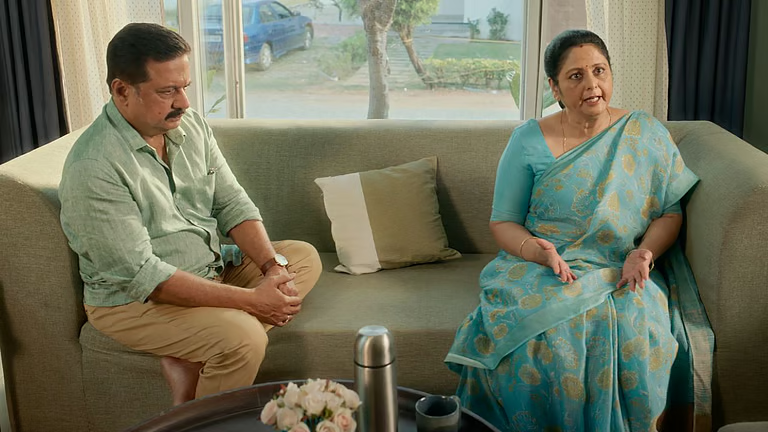
The series begins with Kunji and Thangamma being prepared by their family to renew their vows after 40 years of marriage. Just as we begin to see the cracks within this family setup, Thangamma pushes an envelope stating that she wants a divorce.
Relationship dramas featuring people in their sixties are so rare that you feel instantly hooked, wanting to see how this couple got here — that too with what looks like a reasonably happy, complete family.
The Fantasy Kicks In
The fantasy element arrives quickly, and we deal with narrative devices that will only make sense in this show. At the start, we get an Imtiaz Ali-style flashback featuring parallels between the older couple of today and the incidents from their youth that turned them into the bitter people they’ve become.
We’re told Kunji once wanted to become a lawyer and that he was in love with another woman before being forced to marry Thangamma. As for Thangamma, she had aspirations of her own, including the simple pleasures of being in a happy marriage with an understanding husband.
They both appear to be suffering under the weight of circumstances from over forty years ago — and in an interesting twist of fate, they also get second chances at doing it all over again. For Kunji, this could be something as simple as treating himself to a full meal of mutton and rice, the sort an ageing man is never allowed to eat. He also sneaks into college again to see if he will ever become the lawyer he once dreamt of being.
The series calls it magic, but it feels like a time travel comedy in which four bodies make up the space of two people.
The Early Charm
At least at the beginning, the series feels light and unassuming as it tries to discuss important life events without taking itself too seriously. So when Kunji’s lover from forty years ago cracks the same magic trick to show up as the younger version of herself, the tone is more Priyadarshan than Yash Chopra. There are mix-ups and fun to be had when this couple needs to hug themselves in the oddest of places to regain their younger versions.
Overstuffed Too Soon
But it begins to feel overstuffed a little too soon. Subplots involving their son’s financial woes pop up, and so does the complexity of an ex-lover getting thrown in. Kunji is diagnosed with cancer without it making the kind of impact on the plot that it should. Smaller characters walk in and out, and everything feels too stretched to make the central characters worth caring for after a point.
This is heightened by the less-than-adequate performances of most actors. The dialogues are melodramatic, and the comedy scenes written around mistaken identity begin to feel overdone and tiring. The inadequacies in the television-serial-like making add to the exhaustion as you watch nearly five hours of this series.
We lose interest in the lead couple, and the series gives us resolutions that feel too predictable for a show with such a unique concept at its heart.
The Verdict
But if the idea was to make a show best enjoyed as a second-screen viewing experience, then there’s merit in the meandering nature of the show and the time it takes to get to its point. But as a series that needs to be taken seriously, one can call it as generic as you’d expect from a show titled Love Always.