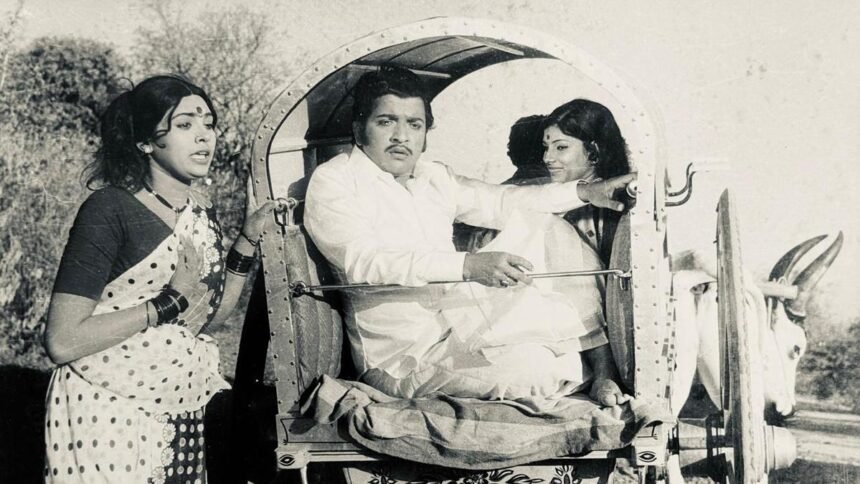
Fifty years ago, a young man with no formal training in film scoring walked into a recording studio and changed Tamil cinema forever. ‘Annakili’, starring Sivakumar and Sujatha, was Ilaiyaraaja’s first film as a music director. It remains one of the most significant milestones in Indian film history.
Released on May 19, 1976, the film was a modest success at the box office. But its music? That was an earthquake.
Before Ilaiyaraaja, there was a template
Until 1976, Tamil film music was dominated by classically trained composers following a predictable orchestral template inspired by Hindi and Western pop. Then came ‘Annakili’.
Ilaiyaraaja brought the village into the studio. He used folk instruments like the nadaswaram, thavil, and urumee melam alongside a Western rhythm section – something never heard before in Tamil cinema.



The opening track ‘Machana Pathingala’ remains iconic. Sung by S. Janaki, with lyrics by Kannadasan, the song’s energetic folk beat and earthy vocals announced a new sound.
“People thought I was mad,” Ilaiyaraaja later recalled. “They said folk music is not for films. I said watch.”
The songs that changed everything
‘Annakili’ had a small soundtrack by today’s standards – just five songs. But every single one became a hit:
- ‘Machana Pathingala’ – A wedding folk number that is still played at Tamil weddings
- ‘Annakili Unnai Theduthe’ – A soulful pathos song that showcased Ilaiyaraaja’s melodic genius
- ‘Aattukutty Muttai Vittu’ – A playful rural number
- ‘Oorukku Nooru Per’ – A philosophical track with folk undertones
- ‘Velli Ghatam’ – A romantic melody
Why it was a trendsetter
Before ‘Annakili’, film songs were recorded with a standard orchestra of 15-20 musicians. Ilaiyaraaja demanded 45 musicians for ‘Machana Pathingala’ alone. He layered sounds – using the mandolin for the first time in Tamil film music, and experimenting with counterpoint and polyrhythms.
He also broke the rule that every song needed a pallavi-anupallavi-charanam structure. Some songs in ‘Annakili’ flow like continuous folk narratives.
The impact on Tamil cinema
‘Annakili’ opened doors for rural stories. Suddenly, directors wanted village settings because Ilaiyaraaja’s music could elevate them. The film’s success paved the way for ’16 Vayathinile’ (1977) and ‘Bhadrakali’ (1977) – both rural subjects with Ilaiyaraaja scores.
Within five years, Ilaiyaraaja became the most sought-after music director in South India. He went on to compose over 1,000 films across multiple languages.
What the film meant to Ilaiyaraaja
For Ilaiyaraaja, who grew up in the village of Pannaipuram without electricity, ‘Annakili’ was deeply personal. The sounds of his childhood – temple festivals, agricultural labourers singing, bullock cart wheels – became the grammar of his music.
“I did not learn music from books. I learned it from the soil, the rain, the people of my village. ‘Annakili’ was my way of thanking them,” he once said.
Fifty years later
Today, at 82, Ilaiyaraaja is a legend with international recognition. The Royal Philharmonic Orchestra has performed his compositions. But for millions of Tamil film lovers, ‘Annakili’ remains where his magic began.
As ‘Machana Pathingala’ still blasts from village loudspeakers at weddings, the music of ‘Annakili’ – raw, rustic, revolutionary – has truly stood the test of five decades.