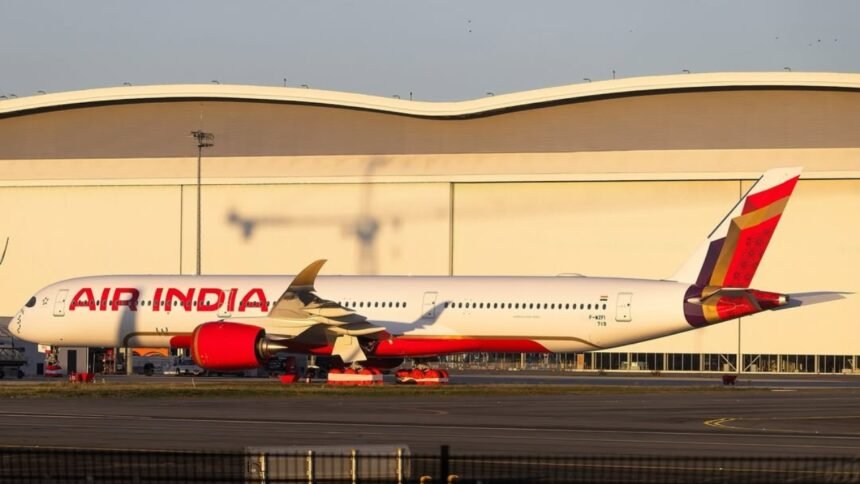
Air India has come under intense scrutiny following a social media controversy over alleged grooming rules for cabin crew. The issue emerged after users circulated images purportedly taken from Air India’s cabin crew handbook, which suggested that traditional symbols such as choora, mangalsutra, teeka, sindoor, and bindi were not permitted.
The posts gained significant traction after being shared by users including Pranav Mahajan on X (formerly Twitter), raising questions around cultural expression within corporate guidelines. The backlash comes just days after Lenskart faced similar scrutiny over its own workplace policies.
What the Viral Posts Claimed
On April 18, 2026, Pranav Mahajan shared images on X that appeared to show pages from an Air India cabin crew handbook. The alleged rules stated that certain traditional items were not allowed.
“It appears that this problem runs much deeper. Here are some pictures from the Air India Cabin Crew Handbook. Bindi, Sindoor, Tilak etc not allowed. Why are they doing this so blatantly?” Mahajan wrote.
The post quickly went viral, accumulating thousands of likes, retweets, and comments. Users expressed outrage, concern, and confusion over why an Indian airline would ban symbols deeply rooted in Hindu cultural and religious traditions.


| Item | Cultural/Religious Significance |
|---|---|
| Bindi | Traditional forehead decoration; symbolizes marriage in some cultures |
| Sindoor | Vermilion worn by married Hindu women |
| Mangalsutra | Sacred necklace worn by married Hindu women |
| Choora | Set of white and red bangles worn by newlywed Hindu women |
| Teeka/Tilak | Mark on forehead; religious or ceremonial significance |
Air India’s Clarification – ‘Outdated Manual’
Responding to the growing controversy, an Air India spokesperson clarified that employees are allowed to wear a bindi and stated that the images circulating online were from an outdated manual that is no longer in use, according to a report by Moneycontrol.
Key Points from Air India’s Response
| Claim | Clarification |
|---|---|
| Bindis are banned | Allowed – policy has been updated |
| Viral images show current policy | Images are from an outdated manual no longer in use |
| Air India is erasing cultural identity | Airline follows international grooming standards post-Tata acquisition |
The airline indicated that its grooming standards were aligned with international practices following its acquisition by the Tata Group – a move aimed at standardizing employee presentation in line with global aviation norms.
The Broader Context – Tata Group’s Acquisition of Air India
The Tata Group regained control of Air India in January 2022, nearly 70 years after the airline was nationalized. Since then, the conglomerate has been working to:
- Modernize the airline’s fleet
- Improve service standards
- Standardize grooming and uniform policies
- Align with international aviation practices
However, the transition has not been without controversy. Changes to grooming policies – even those intended to create a consistent, professional image – can clash with India’s diverse cultural and religious practices.
Air India Under Tata Group
| Aspect | Pre-Acquisition | Post-Acquisition |
|---|---|---|
| Ownership | Government of India | Tata Group |
| Grooming standards | Varied, less standardized | Aligned with international norms |
| Fleet | Aging | Modernizing |
| Brand perception | Declining | Being revitalized |
Public Reaction – Divided Opinions
The debate quickly gained momentum online, with users expressing a range of views.
Concerned/Outraged Voices
- “An Indian airline banning bindi and sindoor? This is erasure of our culture.”
- “What next? Will they ask women to remove their mangalsutra?”
- “The Tata Group should know better. This is not ‘international standards’ – this is cultural insensitivity.”
Defenders of the Policy
- “Many corporate workplaces have dress codes. This is no different.”
- “Airlines worldwide have grooming standards for cabin crew. Uniformity is important.”
- “The images are from an outdated manual. People are getting angry over nothing.”
Voices Calling for Nuance
- “There’s a difference between banning something outright and having reasonable grooming standards that accommodate cultural practices.”
- “If a bindi can be worn without compromising safety or uniformity, why ban it?”
The Lenskart Parallel – A Pattern of Scrutiny?
The Air India controversy comes just days after Lenskart, the eyewear retailer, faced backlash over its own workplace policies. While the specifics differ, the pattern is similar: internal company policies, when made public, can spark intense debate about cultural expression, professional standards, and corporate governance.
| Company | Issue | Outcome |
|---|---|---|
| Lenskart | Alleged restrictive workplace policies | Faced public backlash |
| Air India | Alleged ban on bindi, sindoor, etc. | Clarified policy; said manual outdated |
The episode highlights the increasing scrutiny faced by companies over workplace policies in the digital age. Internal guidelines that were once confined to employee handbooks can now become the subject of national debate within hours.
The Role of Social Media in Corporate Accountability
The Air India controversy demonstrates how social media has changed the relationship between companies and the public.
How the Story Unfolded
| Step | Action |
|---|---|
| 1 | User shares images from alleged cabin crew handbook |
| 2 | Post goes viral on X (Twitter) |
| 3 | Media outlets pick up the story |
| 4 | Air India issues clarification |
| 5 | Debate continues online |
“This episode highlights the increasing scrutiny faced by companies over workplace policies in the digital age, where internal guidelines can quickly become the subject of public debate, particularly when they intersect with questions of identity and cultural representation.”
What This Means for Corporate India
The Air India controversy offers several lessons for companies operating in India:
For Airlines and Hospitality
| Lesson | Implication |
|---|---|
| Cultural sensitivity matters | Global standards must be adapted to local contexts |
| Clear communication | Outdated manuals should be publicly archived or clearly marked |
| Employee input | Involve employees in grooming policy development |
For All Companies
| Lesson | Implication |
|---|---|
| Social media scrutiny | Assume any internal policy could become public |
| Rapid response | Have a crisis communication plan ready |
| Transparency | Clarify policies before they go viral, not after |
The Way Forward – Balancing Standards and Sensitivity
Air India’s clarification – that bindis are allowed and the viral images are from an outdated manual – may defuse the immediate controversy. But the episode raises larger questions:
- How do companies balance international grooming standards with respect for local cultural and religious practices?
- What is the role of employee feedback in shaping workplace policies?
- How should companies communicate policy changes to avoid public misunderstandings?
For Air India, which is in the midst of a major brand revival under Tata Group ownership, the controversy is an unwelcome distraction. But it is also an opportunity to demonstrate that a modern, globally competitive airline can still respect India’s cultural diversity.
As one commentator noted: “There is nothing ‘international’ about banning bindis. Many global airlines have cabin crew from diverse backgrounds who wear their cultural symbols proudly. Air India can do the same.”
A Clarification, Not a Resolution
Air India has clarified that bindis are allowed and that the viral images are from an outdated manual. For many, that is sufficient. For others, the episode has revealed deeper anxieties about cultural erasure in corporate India.
What is clear is that companies can no longer assume their internal policies will remain internal. In the age of social media, every employee handbook is potentially public. Every policy is subject to scrutiny. And every decision – from grooming standards to uniform codes – can become a national conversation.
Air India has weathered this storm. But the broader debate about cultural expression, professional standards, and corporate governance in India is far from over.