DC Studios knew the film wasn’t working for months. Things came to a head in March when the studio tested its own cut against one from filmmaker Craig Gillespie.
Usually, test scores go up, up, and away. But this March, the scores for Supergirl actually went down when DC Studios held a bakeoff, testing competing cuts from filmmaker Craig Gillespie and from the studio, run by James Gunn and Peter Safran.
It was a moment of extreme disappointment for those involved, as the stakes were high, particularly for DC. Supergirl would be a key test for the Warner Bros. division as its first feature not written and directed by Gunn, following last year’s inaugural outing, Superman.
It needed to work to prove the studio could expand beyond projects directed by Gunn, the A-list filmmaker behind the Guardians of the Galaxy movies, Peacemaker and The Suicide Squad — and the very public face of the brand.


The box office failure
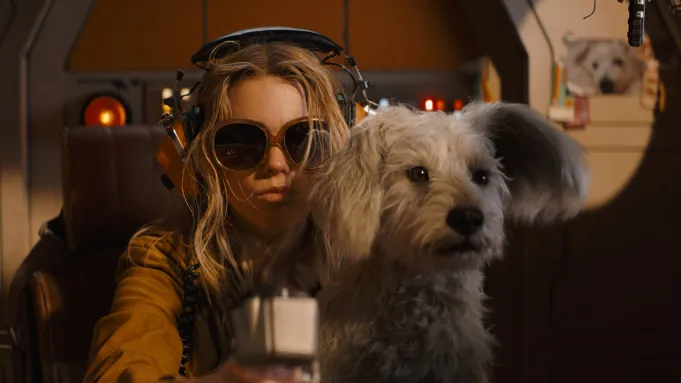
Months later, the Supergirl outcome is now well known. The movie, starring Milly Alcock as the title character and budgeted in the $170 million to $180 million range, crashed and burned on its opening weekend, grossing just $37.1 million, even lower than the reviled, DC-centric bomb, 2024’s *Joker: Folie a Deux*, which opened to $37.6 million and was not made by Gunn and Safran.
The fate of Supergirl may have been seeded early on. Gunn and Gillespie had creative differences over the direction of the movie, numerous sources tell The Hollywood Reporter, and the film never found its footing in the post-production process. The test scores, which are counted on a scale out of 100 points, never escaped the 60s, according to multiple insiders.
Competing cuts
Filming wrapped in May 2025, and as early as the fall of that year, the studio and Gillespie knew the movie wasn’t working. After a December test screening proved to be just okay, the studio decided to take matters into its own hands and took charge of the post-production to make its own cut.
The movie had at least four test screenings, according to sources, with screenings held in December 2025 as well as February and March of this year. Deep into winter, test scores improved and hit the low 70s. However, rather than continue to tinker away on that cut, the studio decided to force a bakeoff by creating two cuts, one by Gillespie and one by the studio.
It is unclear what major differences emerged, but one source says Gillespie’s version was 11 minutes longer and featured more of the villain, Krem, played by Matthias Schoenaerts. When the two competing versions tested, the scores surprisingly dropped significantly, although the studio’s inched out ahead of Gillespie’s…but by only two points, according to sources.
Music as a key friction point
Music was a key friction point. From his first Guardians of the Galaxy movie on, Gunn established himself as the master of the movie soundtrack and the all-important needle drop. Gillespie also has a reputation for melding music to movies, as seen in Cruella.
The big needle drop in the final set piece at the February screening was a cover version of Cyndi Lauper’s “Girls Just Want to Have Fun.” That song choice came from Gunn, but it ultimately was abandoned for the Jimmy Eat World cover used in the final film.
What’s next for DC Studios
Despite the setback, Gunn and Safran will continue to guide the ship. A Superman spinoff focusing on Jimmy Olsen is getting a comedic take with mockumentary series DC Crime that will shoot this fall. There is also a series focused on Mr. Terrific in active development.
But Supergirl‘s failure does put a scrutinizing spotlight on Gunn, who has positioned himself as the face of the company as no other studio head has before. As one studio head noted: “Gen Z does not care about superhero movies. That genre belongs to millennials.”