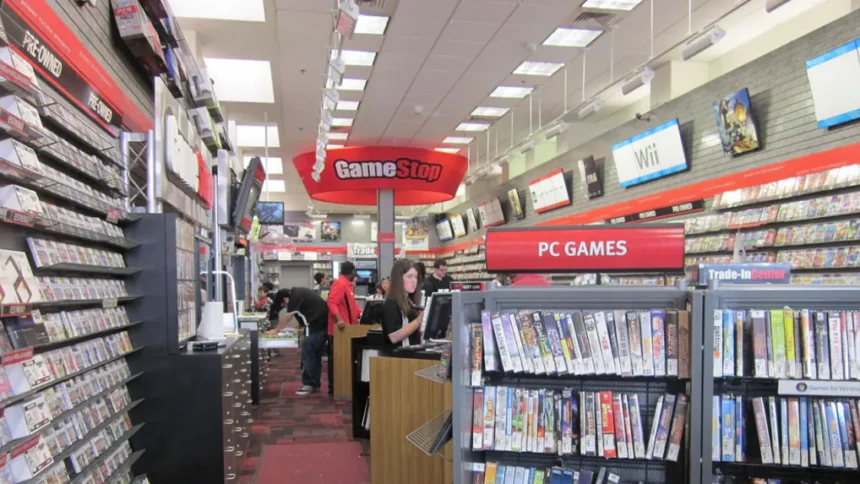
GameStop has proposed a $56 billion acquisition of eBay , positioning the potential combined entity as a stronger competitor to Amazon , according to reports.
The unsolicited offer, led by GameStop CEO Ryan Cohen , values eBay at $125 per share in a deal structured as a 50-50 mix of cash and stock. The bid represents a premium of about 20 per cent over eBay’s recent closing price.
The proposal was first reported by The Wall Street Journal , citing an interview with Cohen.
The Strategic Vision: Competing with Amazon
In the interview, Cohen said that bringing eBay and GameStop together could create opportunities to improve earnings and reduce costs , while building a platform capable of competing more directly with Amazon.



Currently, Amazon dominates e-commerce in the United States and globally. A combined GameStop-eBay entity would have:
- eBay’s massive marketplace of buyers and sellers
- GameStop’s physical store footprint (over 4,000 stores globally)
- Complementary strengths in collectibles, gaming, and authentication services
The vision is to create a third force in e-commerce — alongside Amazon and Walmart — with a focus on categories where both companies already have strength.
The Offer: $125 Per Share, 20% Premium
| Detail | Information |
|---|---|
| Offer value | $56 billion |
| Price per share | $125 |
| Premium | ~20% over eBay’s recent closing price |
| Deal structure | 50% cash, 50% stock |
| Financing | $20 billion debt commitment from TD Bank |
The deal is unusual in scale: GameStop, valued at around 12billion∗∗,isseekingtoacquireeBay,whichhasamarketcapitalizationofroughly∗∗12billion∗∗,isseekingtoacquireeBay,whichhasamarketcapitalizationofroughly∗∗46 billion.
This is a classic “smaller fish acquires larger fish” scenario — rare in corporate history and high-risk.
Ryan Cohen: Ready for a Proxy Fight
Cohen said he is prepared to take the offer directly to shareholders through a proxy fight if eBay’s board does not respond to the proposal.
A proxy fight involves convincing eBay’s shareholders to vote out board members who oppose the deal and replace them with directors who support it. This is an aggressive tactic, signaling that Cohen is serious about the acquisition — and unwilling to walk away if eBay’s management resists.
Financing: $20 Billion in Debt from TD Bank
To finance the deal, GameStop has secured a commitment letter for approximately $20 billion in debt from TD Bank.
The company may also seek additional funding from external investors , including sovereign wealth funds (government-owned investment funds from countries like Saudi Arabia, UAE, Singapore, or Norway).
Raising $20 billion in debt is significant. GameStop will need to demonstrate that the combined company can generate enough cash flow to service that debt — otherwise, the acquisition could bankrupt the acquirer.
The Financial Context: GameStop’s Recent Performance
GameStop recently reported a 14 per cent decline in fourth-quarter revenue as it continues to navigate a shift toward digital purchases (downloading games instead of buying physical discs).
This decline reflects broader trends in the gaming industry. Consumers increasingly buy games digitally through platforms like Steam, PlayStation Store, and Xbox Store. GameStop’s traditional business model — selling physical games in brick-and-mortar stores — has been under pressure for years.
The eBay acquisition is, in part, a diversification strategy — moving beyond gaming into general e-commerce and collectibles.
eBay’s Recent Performance: A Brighter Picture
In contrast to GameStop’s struggles, eBay has projected second-quarter revenue above expectations , supported by growth in categories such as:
- Collectibles (trading cards, coins, memorabilia)
- Automotive parts
- Live-streamed auctions
eBay has successfully pivoted toward “passion categories” — items that collectors and enthusiasts seek out. Live-streamed auctions, in particular, have been a growth driver, attracting younger audiences who enjoy the entertainment aspect of bidding.
The Synergy: GameStop Stores Supporting eBay
Cohen said that GameStop’s physical stores could be used to support eBay’s marketplace operations, including:
- Item collection (customers dropping off items to be sold on eBay)
- Authentication (verifying that luxury goods, trading cards, or collectibles are genuine)
Authentication is a major pain point for eBay. Buyers worry about counterfeit goods. If GameStop stores can serve as trusted authentication centers, that could significantly increase buyer confidence and unlock higher-value sales.
This would also drive foot traffic to GameStop stores — giving them a new purpose beyond game sales.
Leadership: Cohen as CEO of Combined Company
Cohen indicated that he would serve as CEO of the combined company if the deal is completed.
This is notable because Cohen is already GameStop’s CEO and Chairman. He is an activist investor who built a significant stake in GameStop during the 2021 “meme stock” frenzy and then pushed for strategic changes. Taking on eBay’s leadership would be a massive expansion of his responsibilities.
The Amazon Rivalry Angle
The framing of this deal as a way to compete with Amazon is ambitious.
Amazon’s e-commerce dominance comes from:
- Massive selection (millions of products)
- Fast shipping (Prime)
- Low prices
- Integration with other services (Prime Video, AWS, etc.)
A combined GameStop-eBay would not have Amazon’s scale or logistics network. But it could carve out a niche in collectibles, gaming, and authenticated second-hand goods — categories where Amazon is less dominant.
Risks and Challenges
Several factors could derail the deal:
First, regulatory approval — antitrust regulators might block a merger of two major e-commerce players, even if they are smaller than Amazon.
Second, financing — $20 billion in debt is a heavy burden. If interest rates rise or if the combined company underperforms, debt servicing could become impossible.
Third, integration — merging two large, distinct corporate cultures is notoriously difficult. eBay’s marketplace model is very different from GameStop’s retail model.
Fourth, shareholder resistance — eBay’s shareholders may decide that $125 per share is too low, or that GameStop’s stock is too risky as acquisition currency.
Fifth, management distraction — even pursuing the deal could distract both companies from their core businesses.
Historical Context: GameStop’s Transformation
GameStop was once a struggling brick-and-mortar retailer, mocked by investors as a “dying business.” In 2021, a Reddit-driven “meme stock” frenzy sent its share price soaring, and activist investors — including Ryan Cohen — took control.
Since then, GameStop has been attempting to transform itself into a different kind of company: more digital, more e-commerce focused, and now, potentially, a major player in online marketplaces.
The eBay bid is the most aggressive move yet in that transformation.
Market Reaction
The news of the bid sent ripples through both companies’ stock prices. eBay’s shares rose on the premium offer, while GameStop’s shares fluctuated as investors weighed the risks of the massive debt.
As of the article’s publication (May 4, 2026), eBay’s board had not yet responded to the proposal. Whether they will negotiate, reject, or ignore the offer remains to be seen.