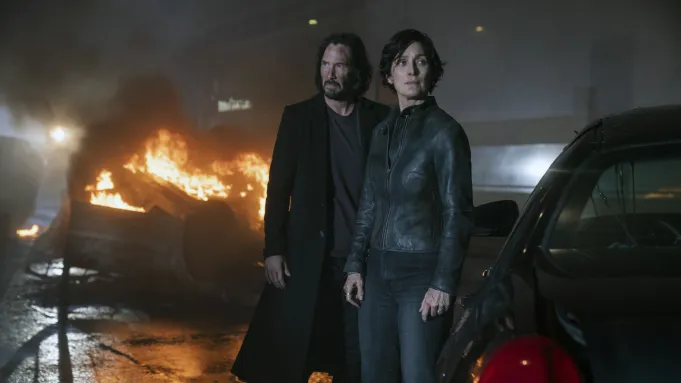
Warner Bros. has reached a $57 million settlement with Village Roadshow to resolve a bitterly fought legal battle over financing for The Matrix Resurrections.
The agreement, approved in bankruptcy court, brings some closure to a dispute that began in 2022 and played a significant role in driving Village Roadshow — once one of Hollywood’s most prolific behind-the-scenes financiers — into Chapter 11 bankruptcy protection.
The Numbers: What Was Owed, What Was Paid
| Amount | Explanation |
|---|---|
| $107 million | Original damages awarded to Warner Bros. |
| $17 million | Additional interest |
| $125 million | Total judgment against Village Roadshow |
| $57 million | Final settlement amount paid by Village Roadshow |
The $57 million figure represents the damages owed to Warner Bros. after an arbitrator’s ruling was modified on appeal.
Background: How the Legal Battle Started
The dispute traces back to 2022, when Warner Bros. filed two arbitration demands against Village Roadshow:



| Arbitration | Subject |
|---|---|
| First | The Matrix Resurrections |
| Second | Wonka and other shared properties |
Village Roadshow’s Counter-Lawsuit
Village Roadshow responded by filing a headline-grabbing lawsuit against Warner Bros. in California state court, accusing the studio of breach of contract over its decision to release The Matrix Resurrections simultaneously on HBO Max and in theaters — a practice Warner Bros. employed during the pandemic.
The case was quickly moved to arbitration, where Village Roadshow lost.
The Arbitrator’s Ruling (2023)
An arbitrator found in 2023 that Village Roadshow breached the co-ownership and distribution agreements by failing to pay its $107 million share of the co-financing agreement.
| Finding | Result |
|---|---|
| Village Roadshow’s liability | Breached agreements |
| Warner Bros. awarded | 107million+17 million interest |
| Village Roadshow’s claims | Denied (unfair competition, breach of contract, bad faith) |
The decision initially called for Village Roadshow to pay $125 million to buy a 50% share of The Matrix Resurrections — meaning it would be entitled to half of all proceeds after Warner Bros. recouped distribution fees.
However, on appeal, it was concluded that Village Roadshow could not be forced to purchase the film. The $57 million figure represents the modified damages.
The Bankruptcy Connection
When Village Roadshow moved for Chapter 11 bankruptcy protection last year, Warner Bros. filed a claim for the $125 million judgment.
| Event | Detail |
|---|---|
| Bankruptcy filing | Last year (2025) |
| Warner Bros. claim | $125 million |
| Settlement agreement | $57 million in bankruptcy court |
| Payment deadline | Wednesday (May 6, 2026) |
Why Did Village Roadshow Go Bankrupt?
According to Keith Maib, Village Roadshow’s chief restructuring officer, the Warner Bros. lawsuit “irreparably decimated the working relationship” with the studio.
Other factors included:
- A costly endeavor aimed at creating content in-house
- The breakdown of a decades-long partnership with Warner Bros.
- Inability to participate in key franchises
The Wonka Dispute and Other Franchises
The second arbitration over Wonka and other properties is covered by the settlement — but with an important caveat:
Warner Bros. said it would dismiss the case without prejudice, meaning those claims can be reasserted in the future.
Other Films at Issue in the Legal Battle
Village Roadshow alleged it was shut out of co-financing sequels and remakes to key franchises, including:
- Wonka
- Joker
- I Am Legend
The ‘Edge of Tomorrow’ Example
According to court filings, Village Roadshow wanted in on a TV series being developed based on Edge of Tomorrow but was told the project wouldn’t move forward if it didn’t relinquish its rights. The studio ended up abandoning the show entirely.
Who Bought Village Roadshow’s Derivative Rights?
During the bankruptcy, Warner Bros. tried to buy Village Roadshow’s derivative rights to several movies — which give the owner the right to participate in certain sequels and remakes.
| Bidder | Amount | Result |
|---|---|---|
| Alcon Entertainment | $18.5 million | ✅ Won |
| Warner Bros. | $19.5 million (revised bid) | ❌ Rejected |
Practical Magic 2 is among the first titles that Alcon and Village Roadshow have partnered on under the new arrangement.
Timeline of Key Events
| Date | Event |
|---|---|
| 2021 | The Matrix Resurrections released (theatrical + HBO Max same day) |
| 2022 | Warner Bros. files arbitration demands; Village Roadshow sues |
| 2023 | Arbitrator rules against Village Roadshow ($125 million judgment) |
| 2025 | Village Roadshow files for Chapter 11 bankruptcy |
| May 2026 | $57 million settlement reached and approved |
What This Means for Hollywood Financing
The collapse of the Warner Bros.-Village Roadshow partnership — once one of Hollywood’s most successful co-financing relationships — serves as a cautionary tale.
| Previously | Now |
|---|---|
| Backed The Matrix and Ocean’s franchises | In bankruptcy |
| Long-term co-financing deals | Relationship “irreparably decimated” |
| Major behind-the-scenes player | Derivative rights sold to Alcon |
The case highlights the risks of:
- Simultaneous release strategies (theatrical + streaming)
- Breakdowns in long-term studio-financier relationships
- Legal disputes that spiral into existential crises
A Settlement, But Not an End
The $57 million settlement resolves Village Roadshow’s liability to Warner Bros. over The Matrix Resurrections — but the company’s future remains uncertain.
Having emerged from bankruptcy with its derivative rights sold to Alcon and its relationship with Warner Bros. in tatters, Village Roadshow is a shadow of the company that once helped finance some of Hollywood’s biggest blockbusters.
For Warner Bros., the settlement brings a measure of closure — though the without prejudice dismissal on the Wonka dispute means the legal saga may not be entirely over.